
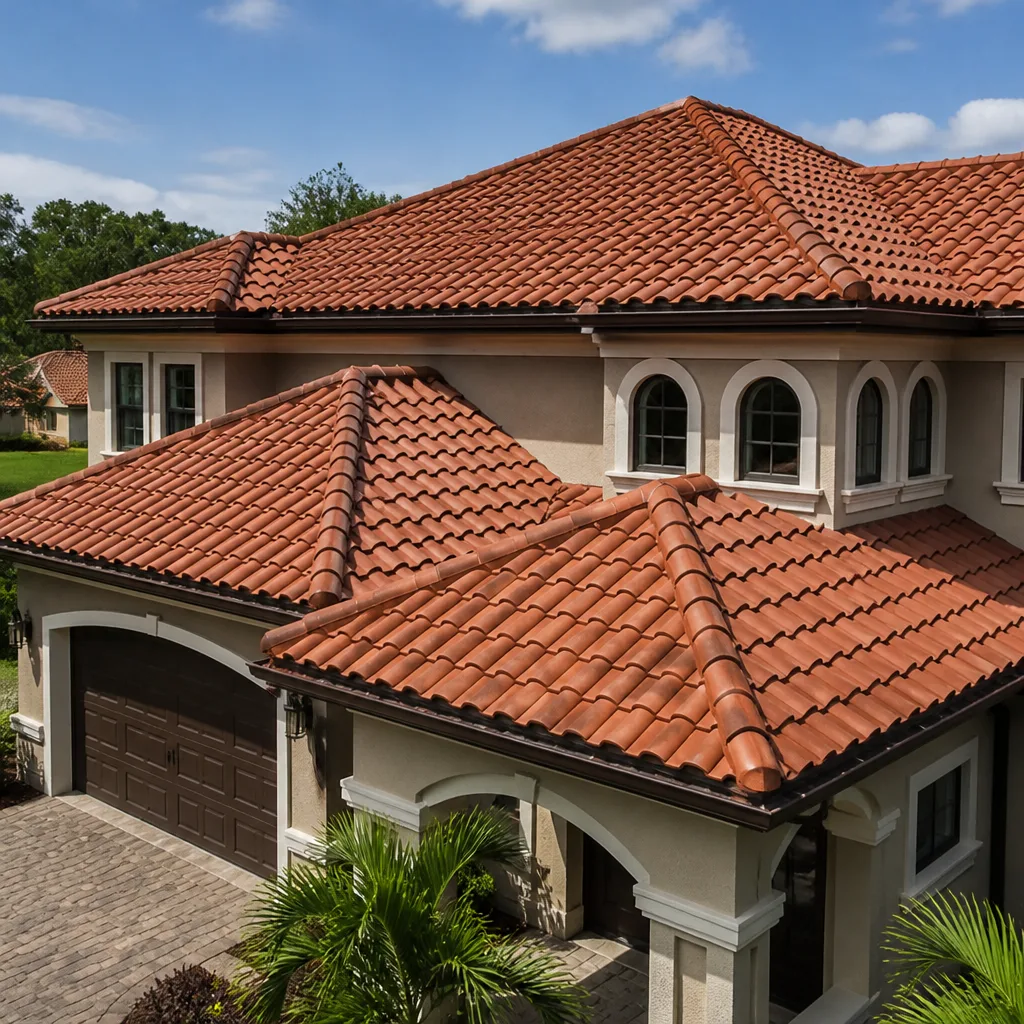
 Tile roofing
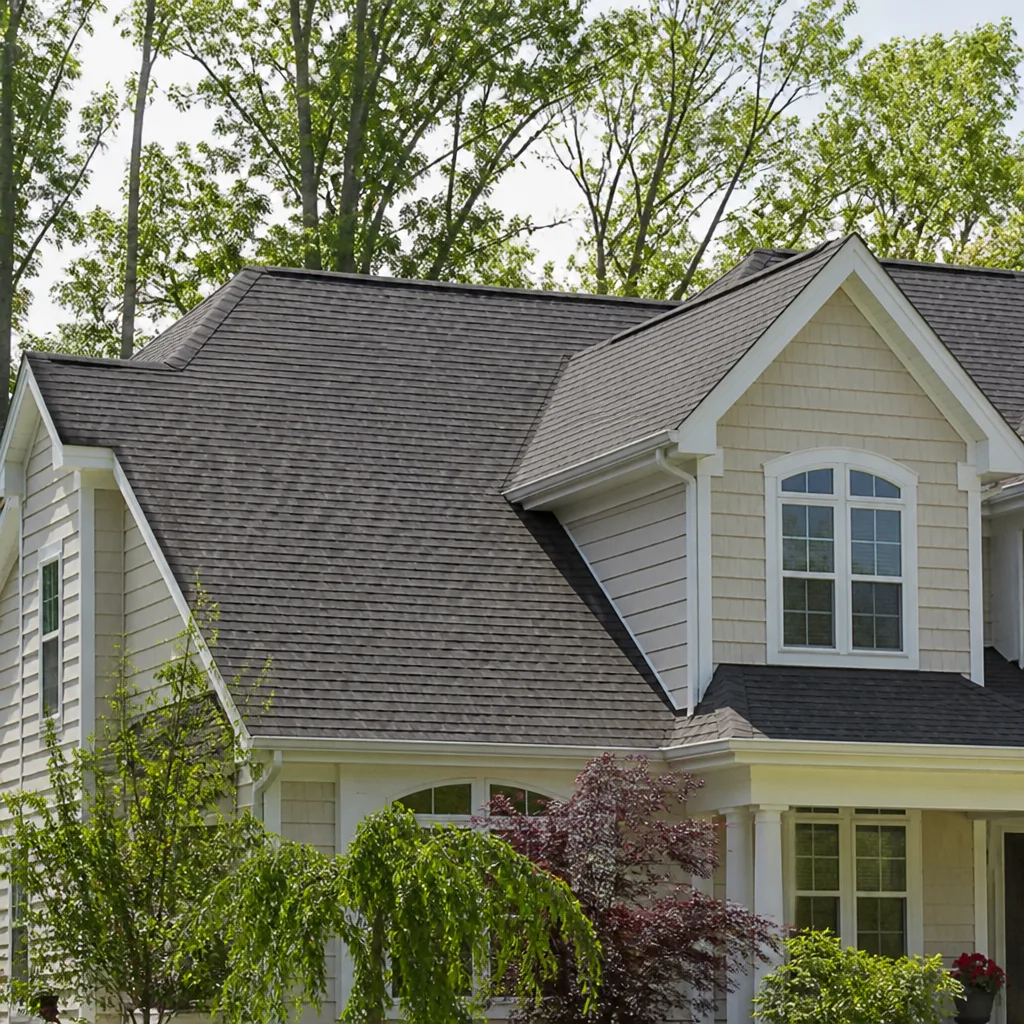 Architectural shingles
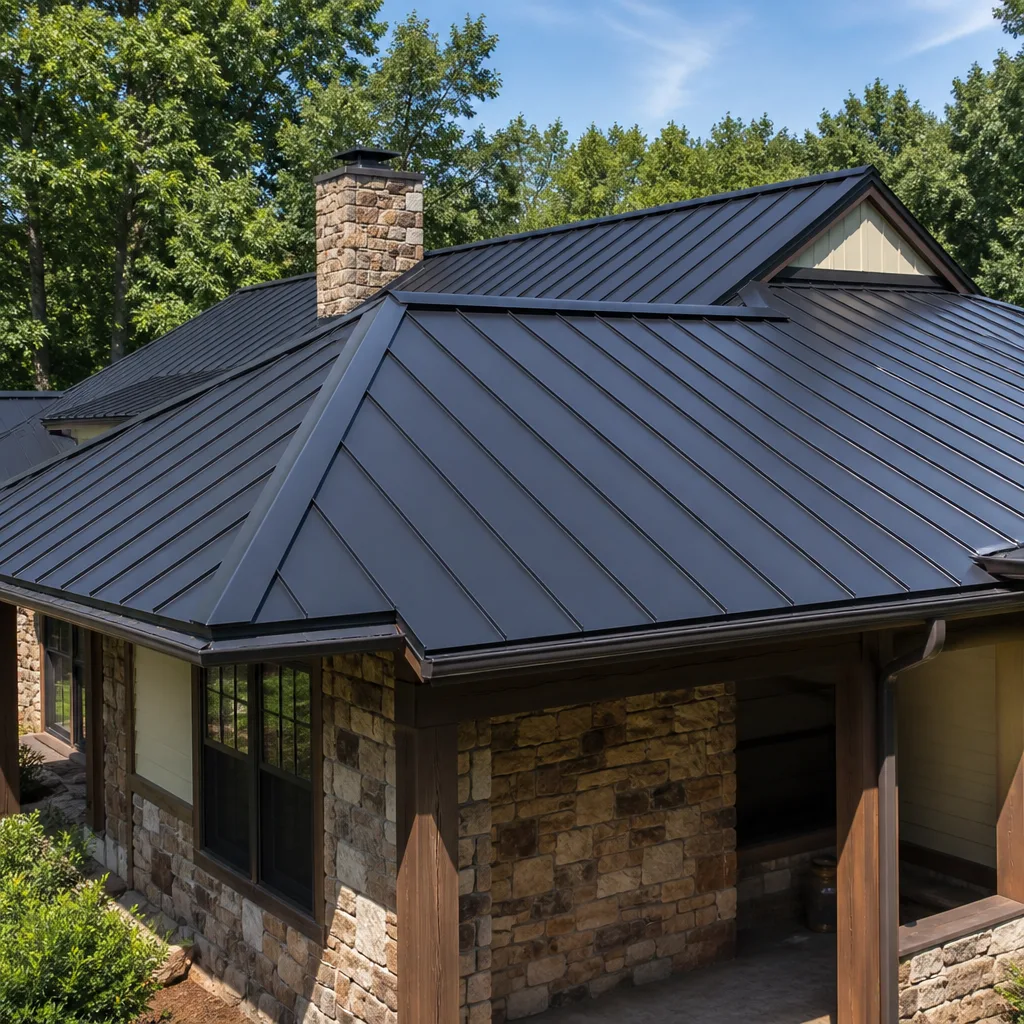 Metal roofing
 GAF
GAF Owens Corning
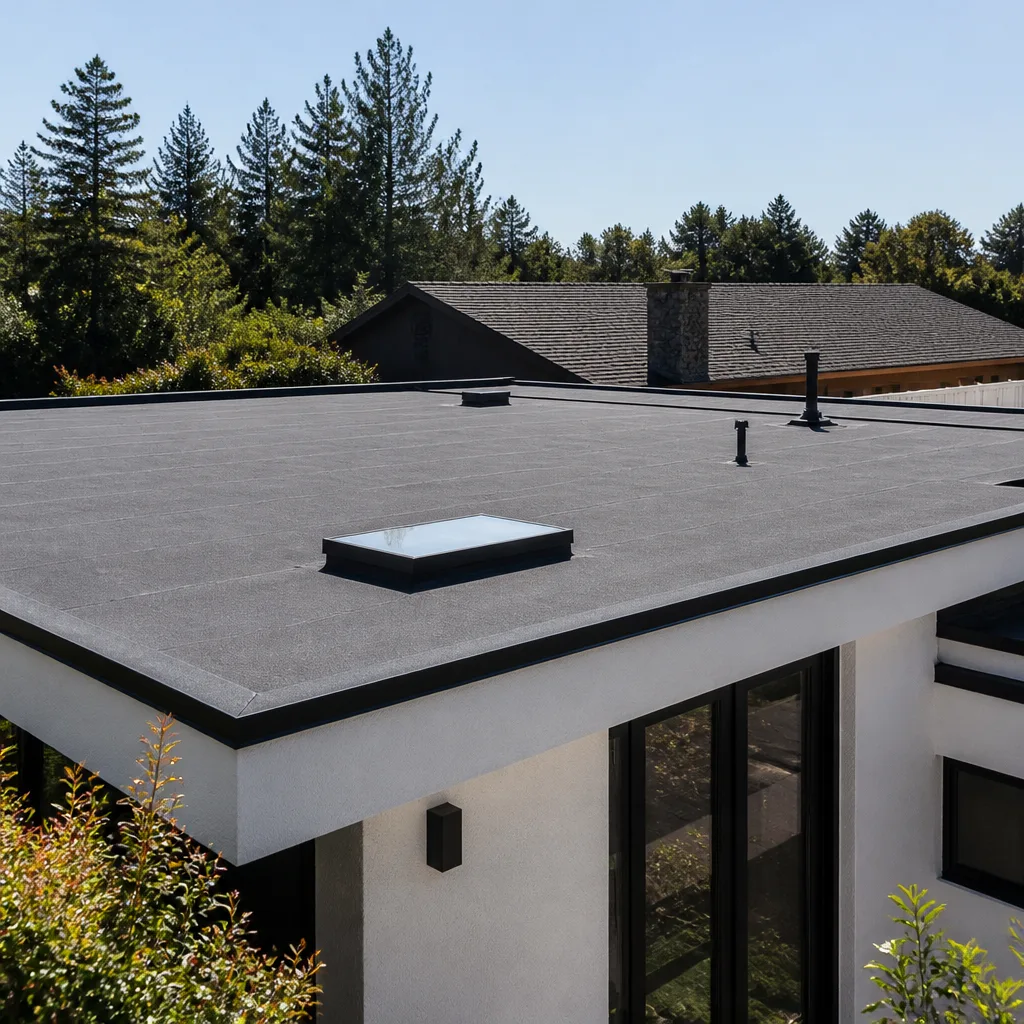 Flat & low-slope
Free roof inspection with deck photos before we talk money - GAF and Owens Corning certified installation
Atlas Flashing Replacement: The Miami Owner’s Guide
Atlas flashing replacement in Miami typically runs $275 to $650 installed, depending on which flashing component failed and how much of it needs to be pulled and re-set. Most jobs are done in a single visit, and we stock Atlas-compatible flashing on our trucks so we’re not running back to a supplier mid-repair. Here’s how this usually surfaces: you notice a water stain creeping across the ceiling after a heavy afternoon storm, or you spot rust bleeding down from a pipe collar, or the flashing around a chimney came loose in a wind event and now you can see daylight where you shouldn’t. Flashing is the metal (or, in Atlas applications, sometimes the reinforced membrane) that bridges the gap between your roof and anything that pokes through it, and when it gives out, water gets in fast.
Which Atlas Models This Applies To
Atlas flashing components are designed to work across their roofing system lineup, but the specifics depend on what you have installed. If you’re running Atlas Pinnacle or StormMaster shingles, the flashing work typically involves standard galvanized or aluminum step flashing, pipe collars, and ridge-to-wall transitions that any Atlas-authorized material spec will match. On Atlas roofing with a higher profile or specialty underlayment system, we match the flashing to the specific product line so the seal stays uniform and the warranty language still makes sense.
The OEM-versus-aftermarket decision matters here. Atlas-branded flashing components (where applicable) are made to spec, but the reality is that half the Atlas roofs in Miami are sixty-plus years old and the original flashing was a generic galvanized product that any quality supplier carries. What actually matters is gauge, width, and coating. In Miami’s salt air, we push 26-gauge minimum on metal flashing with a proper corrosion-resistant coating. Cheap 30-gauge flashing from a big-box store fails in three to five years here. We’ve pulled flashing on Coral Gables barrel-tile homes that was paper-thin and rusted through in spots you couldn’t see from the ground. Greg Holloway won’t put that back on a roof.
Styles & brands we work with
Signs Your Atlas Flashing Replacement Is Failing
- Water staining on interior ceilings or walls near chimneys, vents, or roof-wall intersections. Flashing is the first line of defense where the roof meets a vertical surface. When the seal breaks, water follows the path straight down. You’ll usually see the stain within a day or two of a heavy Miami downpour.
- Rust streaks or visible corrosion on metal flashing. Salt air and our humidity accelerate corrosion on exposed flashing. Once rust starts, the metal is compromised. Patching over rust with sealant is temporary at best, and it usually fails within a season.
- Lifted or curling flashing edges after a wind event. South Florida storms put enormous uplift pressure on roof edges and transitions. Once flashing lifts, it catches more wind, which lifts more flashing, which lets water in. It doesn’t fix itself.
- Granule loss or shingle damage immediately around flashing points. Where flashing meets shingle, the sealant or membrane wears first. When shingles start losing granules in a specific ring around a pipe or chimney, the flashing joint has probably been leaking slowly for a while.
- Visible sealant cracking or pulling away from the flashing-to-roof joint. The caulk or sealant used in the original install breaks down under UV exposure, which is relentless in Miami. Once the bead is cracked, water wicks underneath in a way you won’t see until interior damage shows up.
See the difference
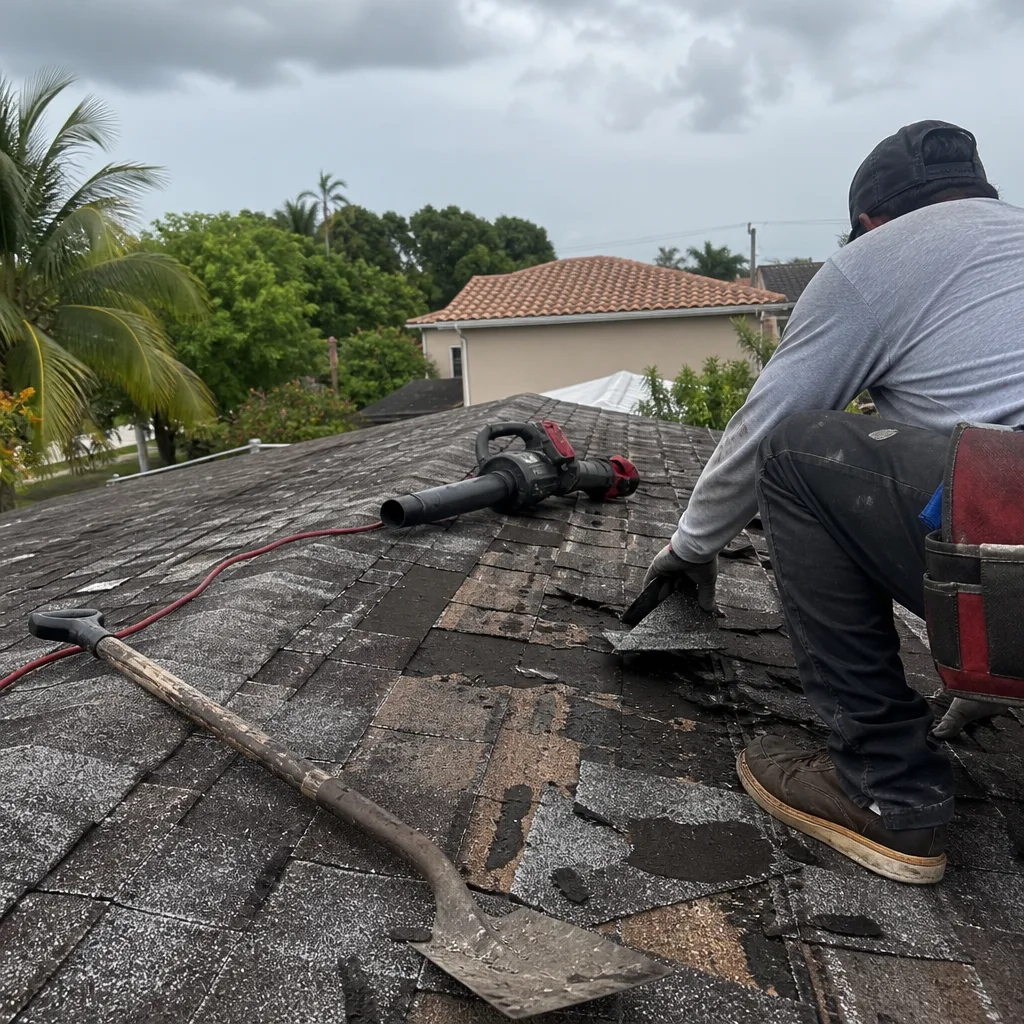 Before
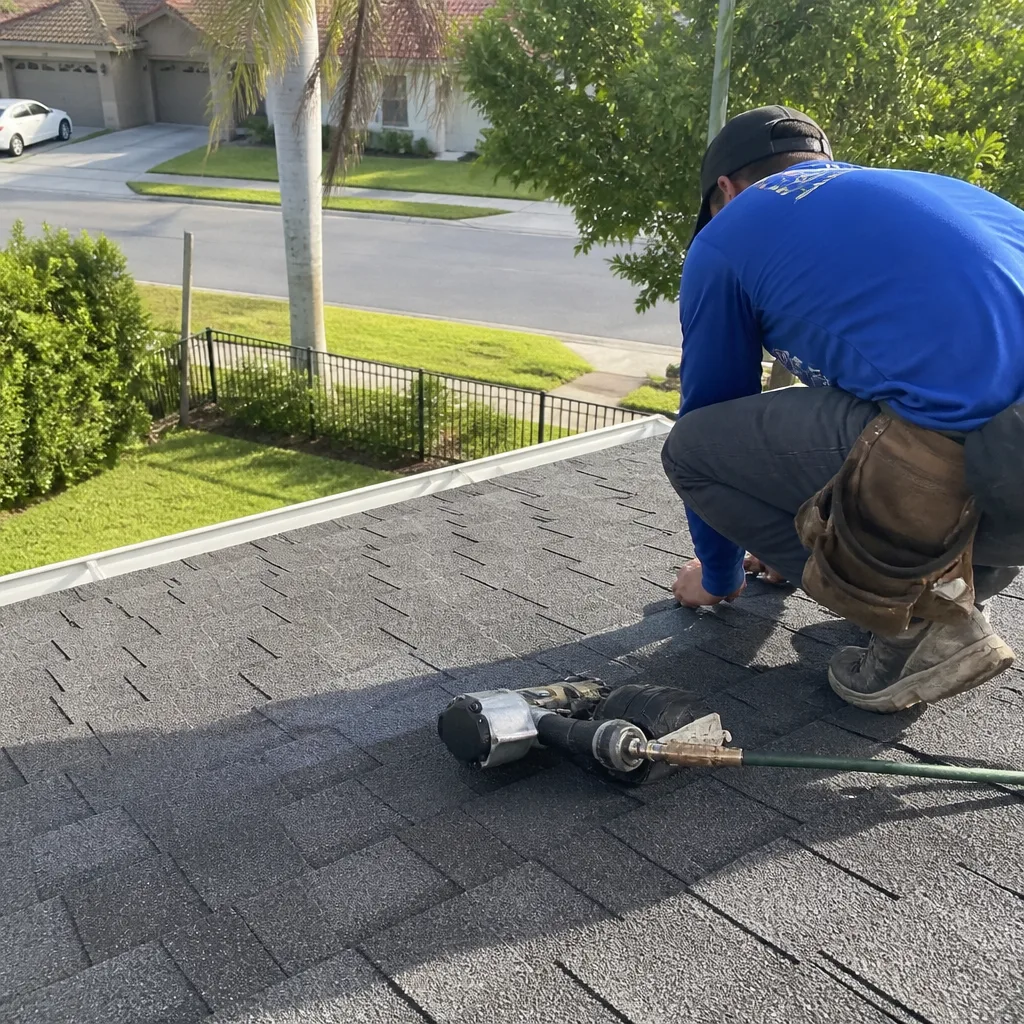 After
After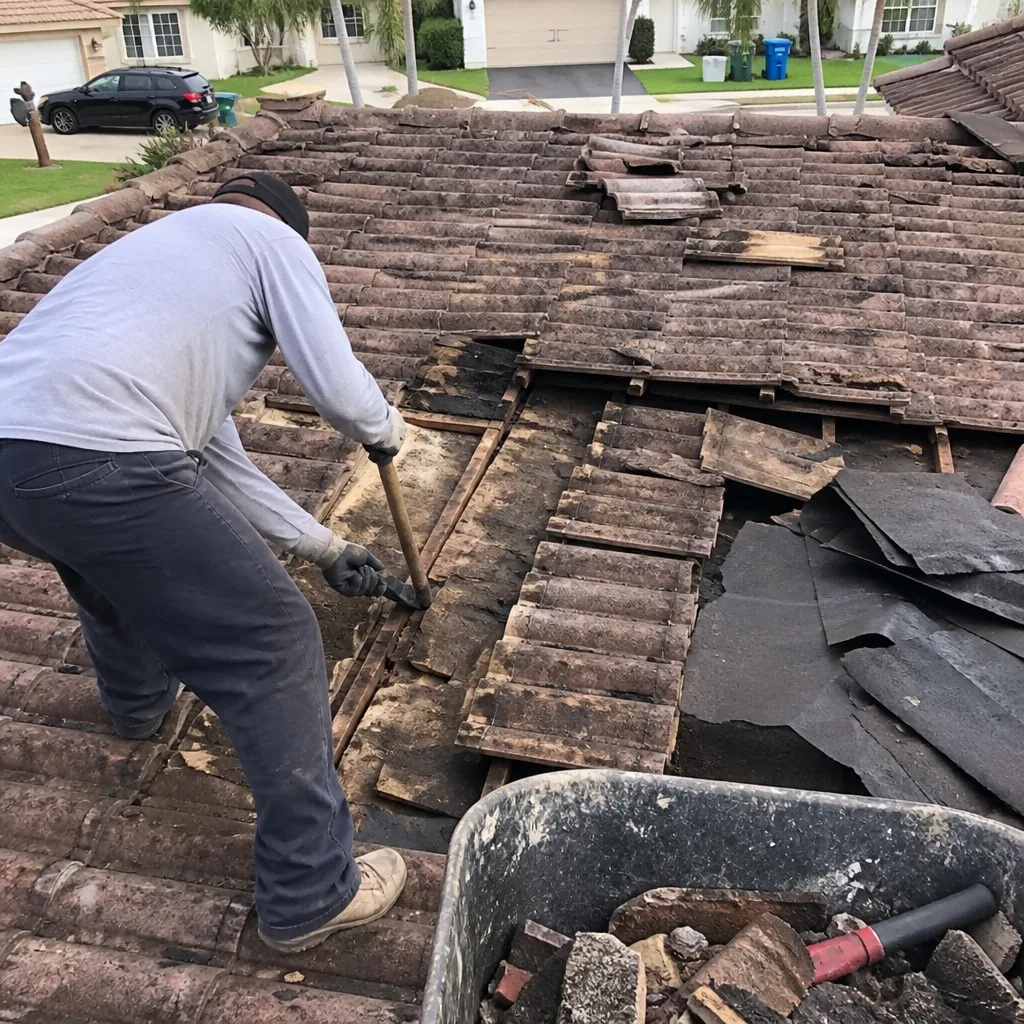 Before
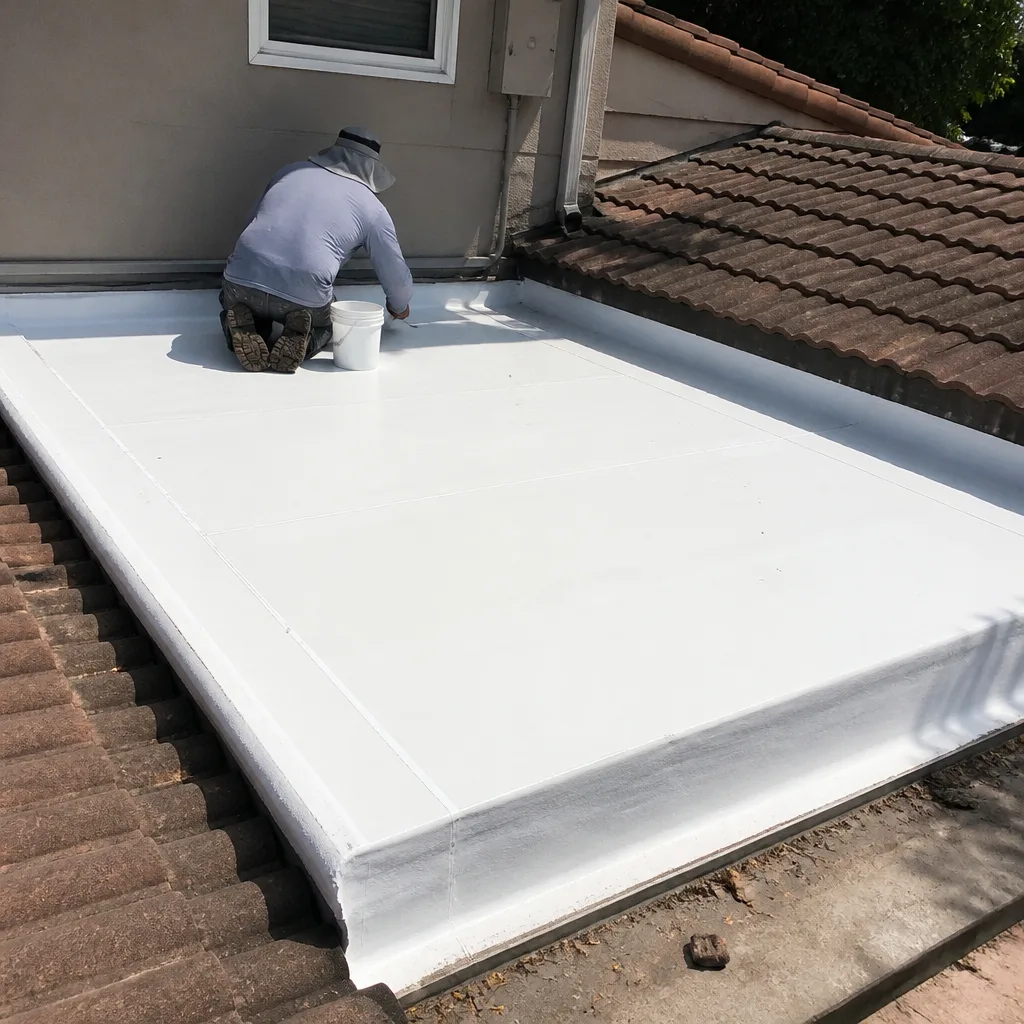 After
After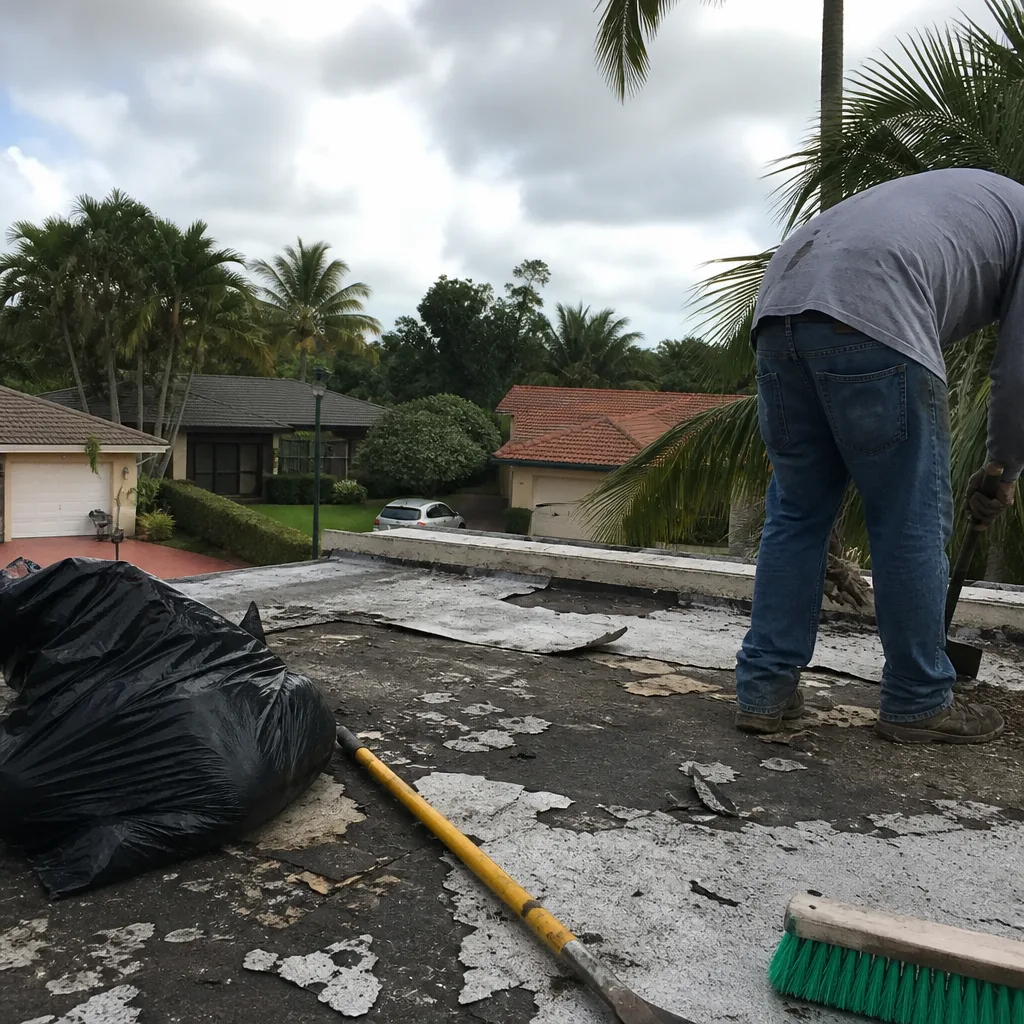 Before
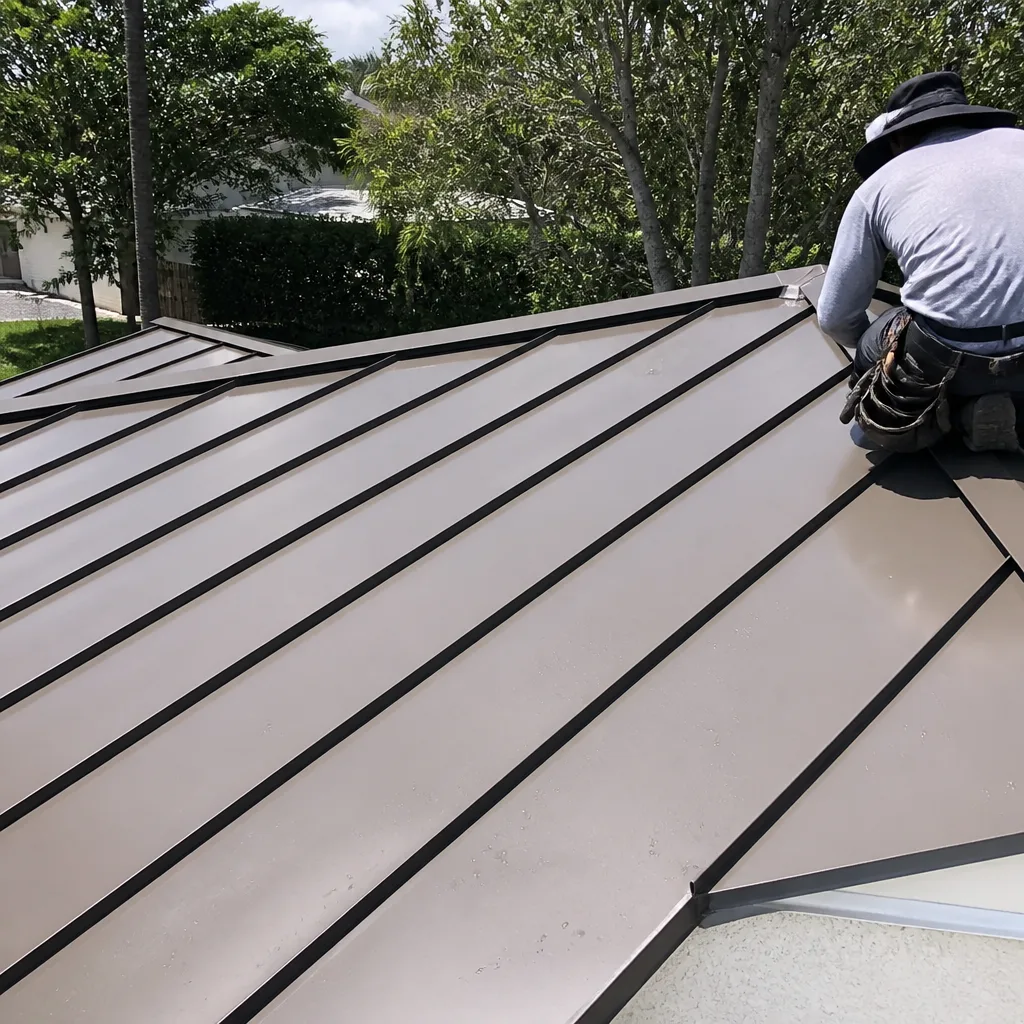 After
AfterReplacement Cost & What’s Included
Let’s talk real numbers, because we always put a written price in your hands before a single nail moves. For a standard vent pipe collar replacement in Miami, you’re looking at roughly $275 to $400 installed. Step flashing along a chimney or wall transitions runs $400 to $650 depending on linear feet and access. Valley flashing replacement falls in the $350 to $550 range. Those numbers include removal of the old flashing, prep of the surface, installation of new flashing with proper sealant, and a written work guarantee that covers the repair for a full year under our 365-Day Done Right Promise.
What drives the price up is access. A two-story roof with a steep pitch means more labor time and more safety equipment. Chimney work where the flashing is embedded in masonry sometimes requires grinding out and re-pointing the mortar joints, which adds a bit. We’ll tell you exactly what’s happening and what it costs before we start. No change orders at the end. No “discovered damage” upsell on a flashing job. The price we hand you is the price we work to.
DIY or Call Us?
Flashing work sits on a weird line. It looks simple from the ground, but the failure points are all in places you can’t inspect from a ladder without getting onto the actual roof surface. And we don’t want you on a Miami roof in July unless that’s already your job. The heat makes shingles soft, the afternoon storms make everything slippery, and a fall from a two-story roof changes your whole year. This isn’t a scare tactic, it’s the honest read from men who’ve been doing this across South Florida for years.
What you can safely do from the ground: look for rust, lifted edges, and missing sealant. Take pictures. Note where interior stains line up with roof penetrations. That’s genuinely useful for us, and it helps you describe the problem accurately on the phone. What you shouldn’t try is re-sealing flashing from a ladder with a caulk gun. It’ll likely fail within weeks because you can’t properly prep the surface or get the sealant where it needs to go. We’ve repaired leak-after-leak jobs where a homeowner or a handyman “fixed” the flashing twice before we got there. The money they spent on materials would have been better put toward a repair that lasts. Call (850) 613-1762 and we’ll come have a look.
FAQs
In Miami’s climate, most flashing lasts 15 to 25 years before it needs real attention, though aluminum and properly coated steel hold up better than thin galvanized product. The bigger variable is installation quality. Flashing that was never sealed correctly fails inside of five years, and we see it all the time. If your flashing is older than fifteen years and you’re already seeing rust or leaks, replacement is the right call.
Sometimes, but not often. If the issue is a single popped nail or a small sealant crack and the metal is otherwise sound, a targeted repair makes sense and we’ll tell you that. If the flashing is rusted through, lifted, or the seal has broken along the full length of the joint, replacement is cheaper than repeated repairs that keep failing. We’ll give you an honest read either way, and the written price reflects what actually needs doing. Call (850) 613-1762 for an inspection and a straight answer.
Most flashing replacements on an Atlas roof take between two and four hours, depending on how much flashing is being pulled, the pitch of your roof, and how much heat we’re working in. We schedule the work in a morning or afternoon window, arrive when we said we would, and leave the roof sealed before the afternoon storms roll through.
Yes. We carry a range of flashing profiles and gauges that match Atlas roofing systems, along with compatible options from GAF, Owens Corning, and CertainTeed where appropriate. For uncommon chimney or wall configurations, we’ll bring the right materials on the first visit once we’ve had a look at the problem. Either way, you’re not waiting on a second or third trip while water keeps finding ways in.
If you’ve got a flashing problem on your Atlas roof, you’re not looking for a lecture. You’re looking for the right part, the right price, and a crew that shows up and does the work. That’s what we do. Call Tilehurst Roofing Miami at (850) 613-1762 for a free estimate and a written price before we touch the roof. Know the price before we touch the roof – that’s the only way I know how to work.
Written by Greg Holloway, Owner, Tilehurst Roofing Miami at Tilehurst Roofing Miami, serving Miami and nearby areas.